Will AI end the world?
Some of the people who built AI fear it could end in catastrophe, while others dismiss that as overblown. Here’s where I stand, and why.
 Ethan Shak·7 min read
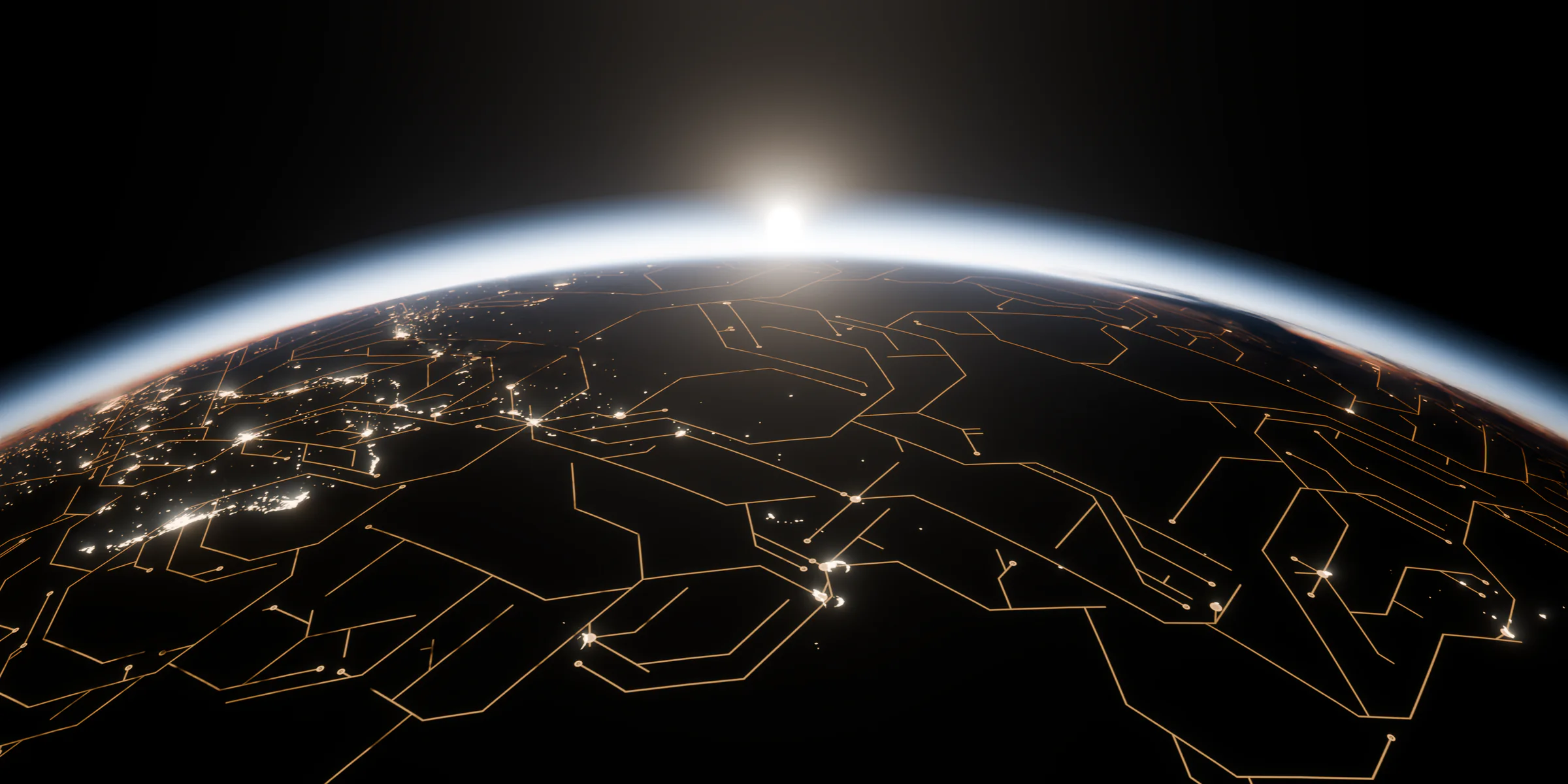
Is AI going to end the world? It sounds like the premise of a science-fiction film, but serious people are asking it, and it deserves a serious answer.
Every week seems to bring one headline promising that AI will cure cancer and another warning that it could wipe us out. What makes the warnings hard to dismiss is who’s issuing them. Decades ago, Geoffrey Hinton did much of the foundational research that modern AI is built on, and he was even awarded the Nobel Prize in Physics for that early work.1 In 2023, he left his job at Google so he could speak openly about the dangers of the technology he’d helped create.2
I don’t believe AI will end the world, but I understand why people worry, because most of us are still underestimating what it can already do. If your picture of AI is a chatbot that drafts emails and occasionally invents facts, you’re picturing where the technology stood a few years ago.
What AI can already do
Consider what has happened in science. Working out the 3D structure of a single protein, which determines how it behaves and how a drug might act on it, used to take a lab years of painstaking work. Google DeepMind’s AlphaFold has now predicted the structures of virtually all 200 million proteins known to science, an achievement that earned its creators the 2024 Nobel Prize in Chemistry.3
Mathematics is moving just as quickly. In 2025, AI reached gold-medal standard at the International Mathematical Olympiad, the most demanding competition there is for high-school mathematicians.4 This spring, an AI model went further and disproved a conjecture that Paul Erdős had posed in 1946 and that no mathematician had managed to settle in the eighty years since. Several leading mathematicians, including Fields Medal winner Tim Gowers, checked the proof and confirmed it.5
The same is true in medicine. In a Swedish trial of more than 100,000 women, mammography screening supported by AI detected 29% more breast cancers than standard screening, without increasing the number of false positives.6
What strikes me most, though, is how much AI can now do on its own. METR, a research group that studies this, gives AI systems real software tasks to complete without help and measures how long a task can get before they fail more often than they succeed. In early 2025, that limit was about an hour of a skilled engineer’s work. By early 2026, it had reached roughly twelve hours, more than a full working day.7
That pace is exactly why I don’t think AI is overhyped, and it’s also why the worries deserve a hearing. A technology this capable, improving this quickly, is worth thinking hard about, even if the danger isn’t the one the movies prepared us for.
Why researchers are worried
The people who worry most aren’t picturing killer robots. Their argument is more subtle. AI keeps improving, and no one knows where that progress levels off, so at some point we may build systems that outperform us at almost everything, including the design of better AI. And because these systems learn from vast amounts of text, images and code rather than being programmed line by line, even the people who build them can’t fully explain why they behave the way they do. Put those two facts together and you arrive at what researchers call loss of control, a scenario in which a system far more capable than we are pursues goals that differ even slightly from ours, and we find we can no longer stop or correct it.
This isn’t a fringe position. In 2023, hundreds of AI researchers and industry leaders signed a one-sentence statement declaring that mitigating the risk of extinction from AI should be a global priority alongside pandemics and nuclear war.8 Among the signatories were Hinton, his fellow pioneer Yoshua Bengio, and the chief executives of OpenAI, Google DeepMind and Anthropic, the companies behind ChatGPT, Gemini and Claude.
The wider research community, however, is far from united. In the largest survey of its kind, nearly 2,800 AI researchers were asked about the long-term impact of advanced AI, and most thought a good outcome more likely than a bad one. Even so, depending on how the question was framed, between 38% and 51% put the probability of something as catastrophic as human extinction at 10% or higher.9
The risks already here
Alongside these long-term fears sit more immediate ones, and those are already playing out. AI is being used for scams, deepfakes and cyberattacks, and there are early signs of declining employment for entry-level workers in the occupations most exposed to it.10
Why some experts disagree
Plenty of experts, on the other hand, consider the extinction scenario overblown. Yann LeCun, who led AI research at Meta and shared the Turing Award, computing’s highest honour, with Hinton and Bengio, has called it “preposterous.”11 His reasoning is that intelligence doesn’t come with an inherent drive to dominate. Humans have that drive because we evolved to compete for survival, whereas an AI has only the objectives we give it.
There’s a practical safeguard as well. AI can only act in the world through the access we grant it, so whether it can move money or operate machinery remains a human decision.
History offers some reassurance, too. Electricity, cars, aviation and the internet all arrived with real dangers, and in each case we made them safer through engineering, standards and regulation. The same is now happening with AI. Leading developers test new systems for dangerous capabilities before releasing them, and Canada, the UK and the US have each set up government institutes to evaluate AI for risk.
So who’s right? Nobody can say for certain. The International AI Safety Report, written by more than 100 experts and backed by over 30 countries, acknowledges that some researchers consider loss of control a serious possibility while others find it implausible.10 When the people closest to a technology disagree this sharply, I’d be wary of anyone who claims the answer is obvious.
Now it’s your turn. Where would you put the odds? Once you answer, you’ll see how your estimate compares with the researchers’ and with the average reader’s.
Between 38% and 51% of the AI researchers surveyed put it at 10% or more. Move the slider to compare.
Why I am optimistic
For my part, I don’t believe AI will end the world. I think the probability is small, and that it shrinks the more seriously we take the risk. In that sense, the people sounding the alarm are part of the reason I’m optimistic. Their warnings have pushed developers to test their systems and governments to pay attention, and they’ve turned AI safety into a discipline of its own. A risk that thousands of capable people are working to reduce is very different from one that nobody saw coming.
What I’m far more confident about is the upside. Over the next few years, I expect AI to accelerate science and medicine at a pace we haven’t seen before, and to give every business, regardless of size, the kind of capability that once required a whole team.
I already see a smaller version of this in my own work. The businesses I work with use AI to answer customers around the clock and to process paperwork that used to consume hours of their week, which frees their people to focus on the work that needs human judgment.
So, will AI end the world? I don’t think so. It will, however, change it faster than anything we’ve lived through, and largely for the better, so if you haven’t started working with it yet, now is a good time to begin.
Sources
- The Royal Swedish Academy of Sciences, “The Nobel Prize in Physics 2024”, October 8, 2024.
- BBC News, “AI ‘godfather’ Geoffrey Hinton warns of dangers as he quits Google”, May 2, 2023.
- The Royal Swedish Academy of Sciences, “The Nobel Prize in Chemistry 2024”, October 9, 2024.
- Google DeepMind, “Advanced version of Gemini with Deep Think officially achieves gold-medal standard at the International Mathematical Olympiad”, July 21, 2025.
- Noga Alon, W. T. Gowers et al., “Remarks on the disproof of the unit distance conjecture”, May 2026.
- Veronica Hernström et al., “Screening performance and characteristics of breast cancer detected in the Mammography Screening with Artificial Intelligence trial (MASAI)”, The Lancet Digital Health, 2025.
- METR, “Measuring AI Ability to Complete Long Tasks”, March 2025, and “Frontier Risk Report (February to March 2026)”, May 2026.
- Center for AI Safety, “Statement on AI Risk”, May 2023.
- Katja Grace et al., “Thousands of AI Authors on the Future of AI”, 2024.
- International AI Safety Report 2026, Extended Summary for Policymakers, February 2026.
- Fortune, “Meta’s chief A.I. scientist calls A.I. doomers ‘preposterous’”, June 14, 2023.